Blue Hole

Landscape, Water No Comments »

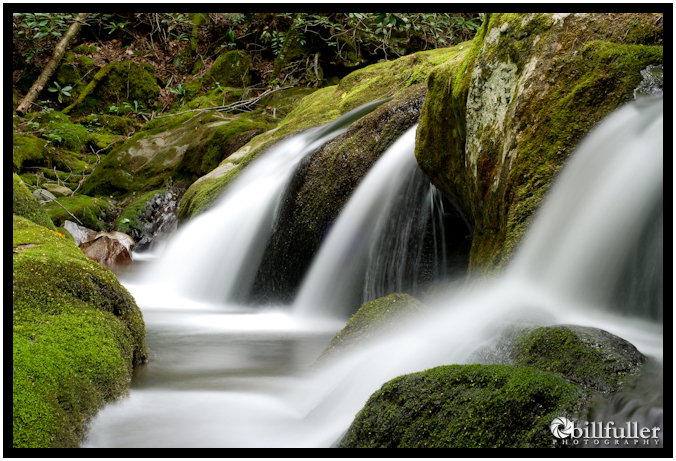
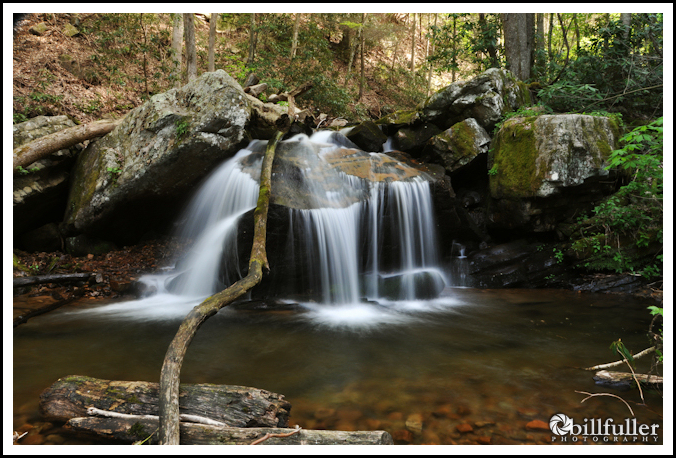
It has been a while since I’ve posted anything, but I plan to get back to a more routine schedule now.  This shot is the first of four waterfalls in an area known as the “Blue Hole” near Stoney Creek, Tennessee.

Liberty’s Tears

Structures No Comments »

The stains running down the cheeks of Lady Liberty seems to resemble tears to me - as she overlooks the New York Harbor and the site of Ground Zero across the Hudson River.

Miss Liberty

Structures No Comments »

The Statue of Liberty - taken from a ferry on the Hudson River.

Late Bloomer

Flora, Macro No Comments »

New England Aster almost ready to bloom.  Common in fields and forest edges in Tennessee’s late summer/early autumn months.

Laurel Run

Water No Comments »

Small waterfall on Laurel Run Creek near Church Hill, Tennessee.

Sweet Sisters

People No Comments »

Allison & Grace

Tickseed Sunflower

Flora, Macro No Comments »

Found along fields and roadsides in late summer and early autumn in Tennessee.  Here’s another:

Laurel Fork

Landscape, Water No Comments »

The beautiful Laurel Fork stream located in the Pond Mountain Wilderness near Hampton, Tennessee.

Bunker Shot

People No Comments »

My friend James, blasting out of a bunker at Buffalo Valley Golf Course.

Nature’s Remedy

Flora, Macro 1 Comment »

Nature almost always provides a remedy for her poisons.  In the case of Poison Ivy, the remedy is a plant called Jewelweed (also referred to as a Touch-Me-Not).  And yes, it sometimes grows in the same areas that you’ll find Poison Ivy.  This time of year Jewelweed is flowering with the small pretty yellow flower (seen above), or with a brighter orange flower of the same shape.

This is a very powerful remedy and will normally stop the itching and spreading of Poison Ivy very quickly.  Simply crush up some leaves and rub them on the infected areas.  Or, if you know that you’ve come in contact with Poison Ivy, rub the Jewelweed leaves on your skin, and you may not get infected at all.  You can also slice open the stem of the plants and rub the liquid on your skin.  I’ve read that Jewelweed with the orange flowers (called Spotted Touch-me-nots) may be more effective than the Yellow Jewelweed, so if you see both growing in the same area (which is very common), opt for the plants with the orange flowers.

You can also freeze and save Jewelweed for later use.  Chop up leaves and boil in water until you get a dark orange liquid (again using the plants with orange flowers).  Strain that liquid and pour and freeze in ice trays.  It will keep in the freezer for up to one year.  Just rub that ice cube on the infected areas and you’ll be amazed at the healing properties.

By the way, everything above the ground on the Jewelweed plant is edible, and the flowers also make a good digestive tonic.